
AI-Powered Search: Google’s Transformation vs. Perplexity

TL;DR, Play the podcast (Audio Overview generated by NotebookLM)

  1. Abstract
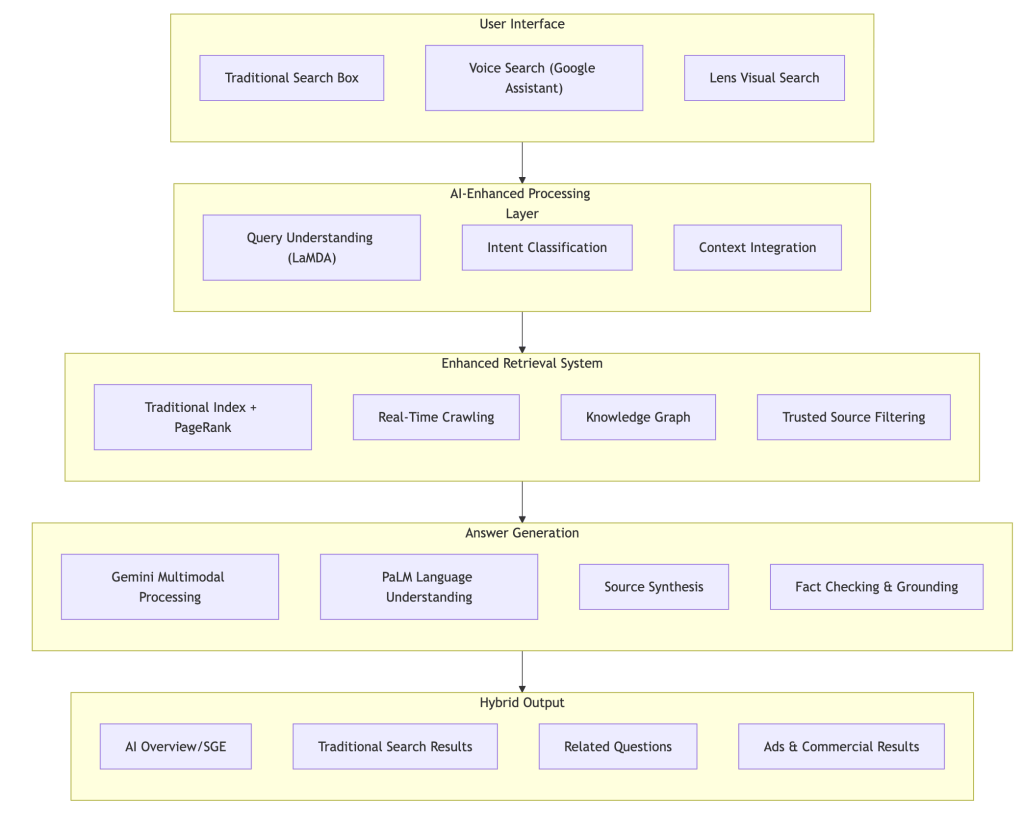
  2. Google’s AI Transformation: From PageRank to Gemini-Powered Search
    1. The Search Generative Experience (SGE) Revolution
    2. Google’s LLM Arsenal
    3. Technical Architecture Integration
    4. Key Differentiators of Google’s AI Search
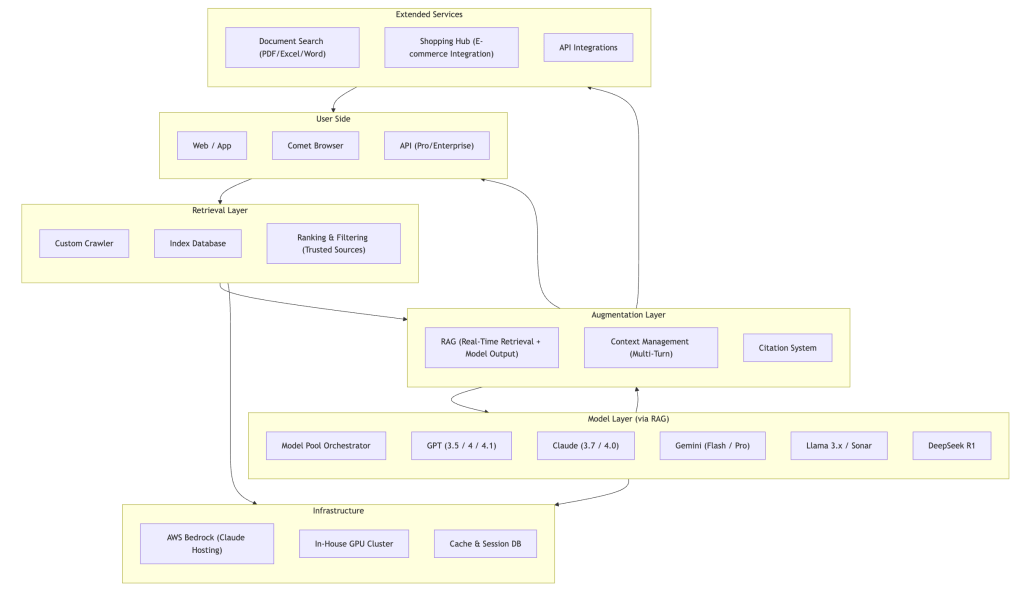
  3. Perplexity AI Architecture: The RAG-Powered Search Revolution
    1. Simplified Architecture View
    2. How Perplexity Works: From Query to Answer
    3. Technical Workflow Diagram
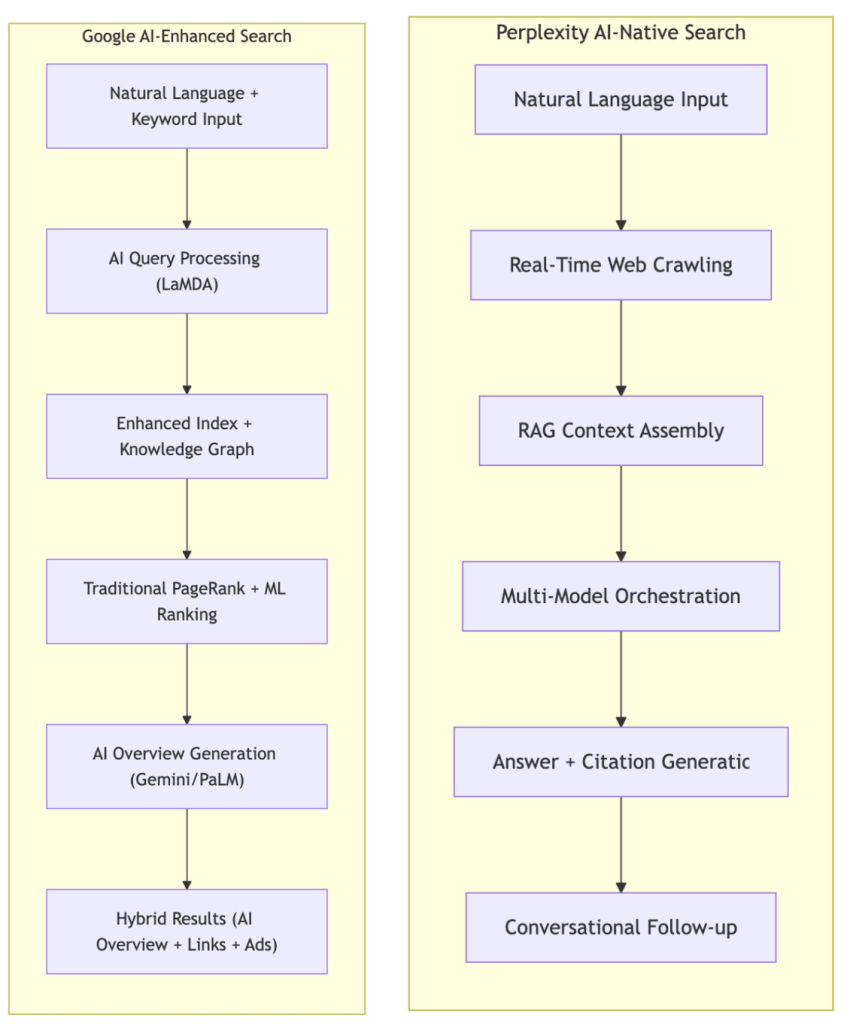
  4. The New Search Paradigm: AI-First vs AI-Enhanced Approaches
    1. Google’s Philosophy: “AI-Enhanced Universal Search”
    2. Perplexity’s Philosophy: “AI-Native Conversational Search”
    3. Comprehensive Technology & Business Comparison
  5. The Future of AI-Powered Search: A New Competitive Landscape
    1. Implementation Strategy Battle: Integration vs. Innovation
    2. The Multi-Modal Future
    3. Business Model Evolution Under AI
    4. Technical Architecture Convergence
    5. The Browser and Distribution Channel Wars
  6. Strategic Implications and Future Outlook
    1. Key Strategic Insights
    2. The New Competitive Dynamics
    3. Looking Ahead: Industry Predictions
  7. Recommendations for Stakeholders
  8. Conclusion

Abstract

This blog examines the rapidly evolving landscape of AI-powered search, comparing Google’s recent transformation with its Search Generative Experience (SGE) and Gemini integration against Perplexity AI‘s native AI-first approach. Both companies now leverage large language models, but with fundamentally different architectures and philosophies.

The New Reality: Google has undergone a dramatic transformation from traditional keyword-based search to an AI-driven conversational answer engine. With the integration of Gemini, LaMDA, PaLM, and the rollout of AI Overviews (formerly SGE), Google now synthesizes information from multiple sources into concise, contextual answers—directly competing with Perplexity’s approach.

Key Findings:

  • Convergent Evolution: Both platforms now use LLMs for answer generation, but Google maintains its traditional search infrastructure while Perplexity was built AI-first from the ground up
  • Architecture Philosophy: Google integrates AI capabilities into its existing search ecosystem (hybrid approach), while Perplexity centers everything around RAG and multi-model orchestration (AI-native approach)
  • AI Technology Stack: Google leverages Gemini (multimodal), LaMDA (conversational), and PaLM models, while Perplexity orchestrates external models (GPT, Claude, Gemini, Llama, DeepSeek)
  • User Experience: Google provides AI Overviews alongside traditional search results, while Perplexity delivers answer-first experiences with citations
  • Market Dynamics: The competition has intensified with Google’s AI transformation, making the choice between platforms more about implementation philosophy than fundamental capabilities

This represents a paradigm shift where the question is no longer “traditional vs. AI search” but rather “how to best implement AI-powered search” with different approaches to integration, user experience, and business models.

Keywords: AI Search, RAG, Large Language Models, Search Architecture, Perplexity AI, Google Search, Conversational AI, SGE, Gemini.

Google has undergone one of the most significant transformations in its history, evolving from a traditional link-based search engine to an AI-powered answer engine. This transformation represents a strategic response to the rise of AI-first search platforms and changing user expectations.

The Search Generative Experience (SGE) Revolution

Google’s Search Generative Experience (SGE), now known as AI Overviews, fundamentally changes how search results are presented:

  • AI-Synthesized Answers: Instead of just providing links, Google’s AI generates comprehensive insights, explanations, and summaries from multiple sources
  • Contextual Understanding: Responses consider user context including location, search history, and preferences for personalized results
  • Multi-Step Query Handling: The system can handle complex, conversational queries that require reasoning and synthesis
  • Real-Time Information Grounding: AI overviews are grounded in current, real-time information while maintaining accuracy

Google’s LLM Arsenal

Google has strategically integrated multiple advanced AI models into its search infrastructure:

Gemini: The Multimodal Powerhouse
  • Capabilities: Understands and generates text, images, videos, and audio
  • Search Integration: Enables complex query handling including visual search, reasoning tasks, and detailed information synthesis
  • Multimodal Processing: Handles queries that combine text, images, and other media types
LaMDA: Conversational AI Foundation
  • Purpose: Powers natural, dialogue-like interactions in search
  • Features: Enables follow-up questions and conversational context maintenance
  • Integration: Supports Google’s shift toward conversational search experiences

PaLM: Large-Scale Language Understanding

  • Role: Provides advanced language processing capabilities
  • Applications: Powers complex reasoning, translation (100+ languages), and contextual understanding
  • Scale: Handles extended documents and multimodal inputs

Technical Architecture Integration

Google’s approach differs from AI-first platforms by layering AI capabilities onto existing infrastructure:

  • Hybrid Architecture: Maintains traditional search capabilities while adding AI-powered features
  • Scale Integration: Leverages existing massive infrastructure and data
  • DeepMind Synergy: Strategic integration of DeepMind research into commercial search applications
  • Continuous Learning: ML ranking algorithms and AI models learn from user interactions in real-time
  • Global Reach: AI features deployed across 100+ languages with localized understanding

Perplexity AI Architecture: The RAG-Powered Search Revolution

Perplexity AI represents a fundamental reimagining of search technology, built on three core innovations:

  1. Retrieval-Augmented Generation (RAG): Combines real-time web crawling with large language model capabilities
  2. Multi-Model Orchestration: Leverages multiple AI models (GPT, Claude, Gemini, Llama, DeepSeek) for optimal responses
  3. Integrated Citation System: Provides transparent source attribution with every answer

The platform offers multiple access points to serve different user needs: Web Interface, Mobile App, Comet Browser, and Enterprise API.

Core Architecture Components

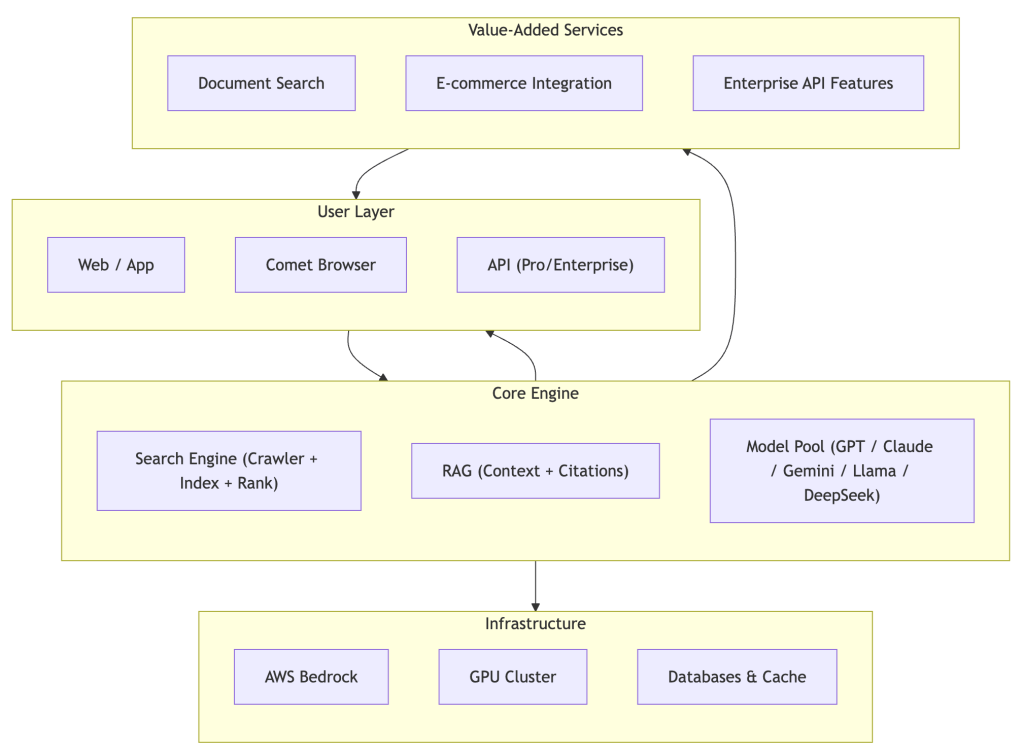
Simplified Architecture View

For executive presentations and high-level discussions, this three-layer view highlights the essential components:

How Perplexity Works: From Query to Answer

Understanding Perplexity’s workflow reveals why it delivers fundamentally different results than traditional search engines. Unlike Google’s approach of matching keywords to indexed pages, Perplexity follows a sophisticated multi-step process:

The Eight-Step Journey

  1. Query Reception: User submits a natural language question through any interface
  2. Real-Time Retrieval: Custom crawlers search the web for current, relevant information
  3. Source Indexing: Retrieved content is processed and indexed in real-time
  4. Context Assembly: RAG system compiles relevant information into coherent context
  5. Model Selection: AI orchestrator chooses the optimal model(s) for the specific query type
  6. Answer Generation: Selected model(s) generate comprehensive responses using retrieved context
  7. Citation Integration: System automatically adds proper source attribution
  8. Response Delivery: Final answer with citations is presented to the user

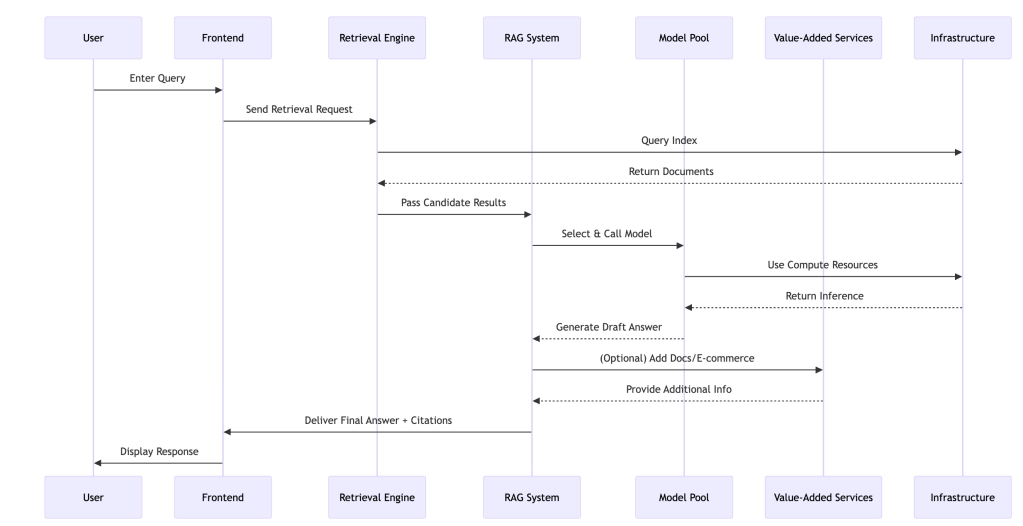
Technical Workflow Diagram

The sequence below shows how a user query flows through Perplexity’s system.

This process typically completes in under 3 seconds, delivering both speed and accuracy.

The New Search Paradigm: AI-First vs AI-Enhanced Approaches

The competition between Google and Perplexity has evolved beyond traditional vs. AI search to represent two distinct philosophies for implementing AI-powered search experiences.

  • Hybrid Integration: Layer advanced AI capabilities onto proven search infrastructure
  • Comprehensive Coverage: Maintain traditional search results alongside AI-generated overviews
  • Gradual Transformation: Evolve existing user behaviors rather than replace them entirely
  • Scale Advantage: Leverage massive existing data and infrastructure for AI training and deployment
  • Model Agnostic: Orchestrate best-in-class models rather than developing proprietary AI
  • Clean Slate Design: Built from the ground up with AI-first architecture
  • Answer-Centric: Focus entirely on direct answer generation with source attribution
  • Conversational Flow: Design for multi-turn, contextual conversations rather than single queries

Comprehensive Technology & Business Comparison

DimensionGoogle AI-Enhanced SearchPerplexity AI-Native Search
InputNatural language + traditional keywordsPure natural language, conversational
AI ModelsGemini, LaMDA, PaLM (proprietary)GPT, Claude, Gemini, Llama, DeepSeek (orchestrated)
ArchitectureHybrid (AI + traditional infrastructure)Pure AI-first (RAG-centered)
RetrievalEnhanced index + Knowledge Graph + real-timeCustom crawler + real-time retrieval
Core TechAI Overviews + traditional rankingRAG + multi-model orchestration
OutputHybrid (AI Overview + links + ads)Direct answers with citations
ContextLimited conversational memoryFull multi-turn conversation memory
ExtensionsMaps, News, Shopping, Ads integrationDocument search, e-commerce, APIs
BusinessAd-driven + AI premium featuresSubscription + API + e-commerce
UX“AI answers + traditional options”“Conversational AI assistant”
ProductsGoogle Search with SGE/AI OverviewPerplexity Web/App, Comet Browser
DeploymentGlobal rollout with localizationGlobal expansion, English-focused
Data AdvantageMassive proprietary data + real-timeReal-time web data + model diversity
ProductsGoogle Search, AdsPerplexity Web/App, Comet Browser

The Future of AI-Powered Search: A New Competitive Landscape

The integration of AI into search has fundamentally changed the competitive landscape. Rather than a battle between traditional and AI search, we now see different approaches to implementing AI-powered experiences competing for user mindshare and market position.

Implementation Strategy Battle: Integration vs. Innovation

Google’s Integration Strategy:

  • Advantage: Massive user base and infrastructure to deploy AI features at scale
  • Challenge: Balancing AI innovation with existing business model dependencies
  • Approach: Gradual rollout of AI features while maintaining traditional search options

Perplexity’s Innovation Strategy:

  • Advantage: Clean slate design optimized for AI-first experiences
  • Challenge: Building user base and competing with established platforms
  • Approach: Focus on superior AI experience to drive user acquisition

The Multi-Modal Future

Both platforms are moving toward comprehensive multi-modal experiences:

  • Visual Search Integration: Google Lens vs. Perplexity’s image understanding capabilities
  • Voice-First Interactions: Google Assistant integration vs. conversational AI interfaces
  • Video and Audio Processing: Gemini’s multimodal capabilities vs. orchestrated model approaches
  • Document Intelligence: Enterprise document search and analysis capabilities

Business Model Evolution Under AI

Advertising Model Transformation:

  • Google must adapt its ad-centric model to AI Overviews without disrupting user experience
  • Challenge of monetizing direct answers vs. traditional click-through advertising
  • Need for new ad formats that work with conversational AI

Subscription and API Models:

  • Perplexity’s success with subscription tiers validates alternative monetization
  • Growing enterprise demand for AI-powered search APIs and integrations
  • Premium features becoming differentiators (document search, advanced models, higher usage limits)

Technical Architecture Convergence

Despite different starting points, both platforms are converging on similar technical capabilities:

  • Real-Time Information: Both now emphasize current, up-to-date information retrieval
  • Source Attribution: Transparency and citation becoming standard expectations
  • Conversational Context: Multi-turn conversation support across platforms
  • Model Diversity: Google developing multiple specialized models, Perplexity orchestrating external models

The Browser and Distribution Channel Wars

Perplexity’s Chrome Acquisition Strategy:

  • $34.5B all-cash bid for Chrome represents unprecedented ambition in AI search competition
  • Strategic Value: Control over browser defaults, user data, and search distribution
  • Market Impact: Success would fundamentally alter competitive dynamics and user acquisition costs
  • Regulatory Reality: Bid likely serves as strategic positioning and leverage rather than realistic acquisition

Alternative Distribution Strategies:

  • AI-native browsers (Comet) as specialized entry points
  • API integrations into enterprise and developer workflows
  • Mobile-first experiences capturing younger user demographics

Strategic Implications and Future Outlook

The competition between Google’s AI-enhanced approach and Perplexity’s AI-native strategy represents a fascinating case study in how established platforms and startups approach technological transformation differently.

Key Strategic Insights

  • The AI Integration Challenge: Google’s transformation demonstrates that even dominant platforms must fundamentally reimagine their core products to stay competitive in the AI era
  • Architecture Philosophy Matters: The choice between hybrid integration (Google) vs. AI-first design (Perplexity) creates different strengths, limitations, and user experiences
  • Business Model Pressure: AI-powered search challenges traditional advertising models, forcing experimentation with subscriptions, APIs, and premium features
  • User Behavior Evolution: Both platforms are driving the shift from “search and browse” to “ask and receive” interactions, fundamentally changing how users access information

The New Competitive Dynamics

Advantages of Google’s AI-Enhanced Approach:

  • Massive scale and infrastructure for global AI deployment
  • Existing user base to gradually transition to AI features
  • Deep integration with knowledge graphs and proprietary data
  • Ability to maintain traditional search alongside AI innovations

Advantages of Perplexity’s AI-Native Approach:

  • Optimized user experience designed specifically for conversational AI
  • Agility to implement cutting-edge AI techniques without legacy constraints
  • Model-agnostic architecture leveraging best-in-class external AI models
  • Clear value proposition for users seeking direct, cited answers

Looking Ahead: Industry Predictions

Near-Term (1-2 years):

  • Continued convergence of features between platforms
  • Google’s global rollout of AI Overviews across all markets and languages
  • Perplexity’s expansion into enterprise and specialized vertical markets
  • Emergence of more AI-native search platforms following Perplexity’s model

Medium-Term (3-5 years):

  • AI-powered search becomes the standard expectation across all platforms
  • Specialized AI search tools for professional domains (legal, medical, scientific research)
  • Integration of real-time multimodal capabilities (live video analysis, augmented reality search)
  • New regulatory frameworks for AI-powered information systems

Long-Term (5+ years):

  • Fully conversational AI assistants replace traditional search interfaces
  • Personal AI agents that understand individual context and preferences
  • Integration with IoT and ambient computing for seamless information access
  • Potential emergence of decentralized, blockchain-based search alternatives

Recommendations for Stakeholders

For Technology Leaders:

  • Hybrid Strategy: Consider Google’s approach of enhancing existing systems with AI rather than complete rebuilds
  • Model Orchestration: Investigate Perplexity’s approach of orchestrating multiple AI models for optimal results
  • Real-Time Capabilities: Invest in real-time information retrieval and processing systems
  • Citation Systems: Implement transparent source attribution to build user trust

For Business Strategists:

  • Revenue Model Innovation: Experiment with subscription, API, and premium feature models beyond traditional advertising
  • User Experience Focus: Prioritize conversational, answer-first experiences in product development
  • Distribution Strategy: Evaluate the importance of browser control and default search positions
  • Competitive Positioning: Decide between AI-enhancement of existing products vs. AI-native alternatives

For Investors:

  • Platform Risk Assessment: Evaluate how established platforms are adapting to AI disruption
  • Technology Differentiation: Assess the sustainability of competitive advantages in rapidly evolving AI landscape
  • Business Model Viability: Monitor the success of alternative monetization strategies beyond advertising
  • Regulatory Impact: Consider potential regulatory responses to AI-powered information systems and search market concentration

The future of search will be determined by execution quality, user adoption, and the ability to balance innovation with practical business considerations. Both Google and Perplexity have established viable but different paths forward, setting the stage for continued innovation and competition in the AI-powered search landscape.

  • Monitor the browser control battle and distribution channel acquisitions
  • Technology Differentiation: Assess the sustainability of competitive advantages in rapidly evolving AI landscape
  • Business Model Viability: Monitor the success of alternative monetization strategies beyond advertising
  • Regulatory Impact: Consider potential regulatory responses to AI-powered information systems and search market concentration

Conclusion

The evolution of search from Google’s traditional PageRank-driven approach to today’s AI-powered landscape represents one of the most significant technological shifts in internet history. Google’s recent transformation with its Search Generative Experience and Gemini integration demonstrates that even the most successful platforms must reinvent themselves to remain competitive in the AI era.

The competition between Google’s AI-enhanced strategy and Perplexity’s AI-native approach offers valuable insights into different paths for implementing AI at scale. Google’s hybrid approach leverages massive existing infrastructure while gradually transforming user experiences, while Perplexity’s clean-slate design optimizes entirely for conversational AI interactions.

As both platforms continue to evolve, the ultimate winners will be users who gain access to more intelligent, efficient, and helpful ways to access information. The future of search will likely feature elements of both approaches: the scale and comprehensiveness of Google’s enhanced platform combined with the conversational fluency and transparency of AI-native solutions.

The battle for search supremacy in the AI era has only just begun, and the innovations emerging from this competition will shape how humanity accesses and interacts with information for decades to come.


This analysis reflects the state of AI-powered search as of August 2025. The rapidly evolving nature of AI technology and competitive dynamics may significantly impact future developments. Both Google and Perplexity continue to innovate at unprecedented pace, making ongoing monitoring essential for stakeholders in this space. This analysis represents the current state of AI-powered search as of August 2025. The rapidly evolving nature of AI technology and competitive landscape may impact future developments.

《大模型精诚》两篇

世有愚者,读方三年,便谓天下无病可治;及治病三年,乃知天下无方可用。

— 【唐】孙思邈《大医精诚》

《大模型精诚(上)》仿照孙思邈的《大医精诚》而作,论述了术之源和道之始。《大模型精诚(下)》继承了上篇的旨趣,进一步阐明了工具的用途;批判了浮夸学术的弊端,强调了明人志向的正直;愿后来的学者能够谨慎守护精诚之道。

  1. 《大模型精诚·上:御术循道》
  2. 《大模型精诚·下:格物穷理》
  3. 《大医精诚》原文
中文摘要 & English Abstract

《大模型精诚》分为上下两篇,仿孙思邈《大医精诚》之文风,提出面对大语言模型(LLMs)之道,须持“精勤”“诚敬”之精神。文章指出,大模型非万能,初学者易为其智能所惑,唯有深入算法原理、洞察数据源头,方能破“表象之惑”,守“正道之用”。技术本无心,人心为舵,若妄施滥用,或将致祸;唯秉“精诚之志”,以智辅仁,方可济世安人。

“On the Sincerity and Mastery in Large Models” is a two-part essay inspired by Sun Simiao’s classical Chinese text On the Absolute Sincerity of Great Physicians. Written in classical Chinese style, it warns against superficial understanding and blind faith in large language models (LLMs). It calls for practitioners to uphold a spirit of diligence (“精”) and sincerity (“诚”)—to understand the inner principles of algorithms and the biases within data. The model is but a tool; its moral compass lies in the human operator. Only by combining technical rigor with ethical restraint can AI serve humanity and avoid causing harm. This is both a philosophical treatise on AI and a critique of today’s hasty tech culture.

《大模型精诚·上:御术循道》

昔者圣贤格物致知,究天人之际,通古今之变,成一家之言。今夫人工智能之兴,盖亦格物之一端也。自其出也,声誉日隆,众人或惊其智,或惧其势,而不知其理者众矣。或操之以利,或役之为器,然利器在手,而不察其锋芒,未必不自伤也。是故观其用者多,究其道者寡。

世有愚者,览模型三月,便谓天下无难可为;及历参数之调三载,方知世无定式可循。故智者必穷其理,探其源,精勤不倦,不得道听途说,或一知半解,便言大道已了,深自误哉!夫模型者,数据瀚海之所凝,千万参数之所成。 初也,对答如流,人以为智;久则偏识横生,虚妄自出。是以不明其本,只见其文,则如沙上筑塔,虽高而易倾;水中捞月,虽美而终空。

夫术者,行之器也;道者,心之正也。有道无术,术尚可求;有术无道,止于术。是故为学者,当怀精诚之心,以格物致知。不为文饰所惑,不为便捷所役。上穷算理之幽,下辨数据之源。善用其利,以济百工;慎防其弊,以安天下。惟敬惟谨,方能行稳致远;术必精诚,方可臻于大成。

噫!大道之行,贵在明理,重在行之。浮华易得,实知难求。若以华辞饰伪,虽一时风光,终非正道;惟有以道御术,以术辅仁,方能不为其所役,而反致其功。愿世之为学者,慎始慎终,毋躁毋惰;内求于诚,外谨于行,不仅以问答取巧,更以格物证理。则大模型之道,不特能济世用事,亦可以砥砺心志,通于大道矣!


《大模型精诚·下:格物穷理》

夫大模型者,非徒技艺之巧,实启万象之门,应世变之机也。机巧肇兴,数十年耕耘,方结斯器,蔚然成势。其志在洞察智能之源,其义在贯通语言之理。通天人,综古今,非术末之流,乃文明之维。治世之助,经纬之翼。然世多趋利者,见术而不求道;窥皮而不识骨。操几行机命,即称智械之师;观几番演示,便誉人类之镜。或视生成若巫术,妄言灵机觉醒,惑众而自昏,笑之可也。

昔圣贤格物致知,寒暑不辍,穷理尽性,尚不敢言道成;今浮学遇器之妙,应一问而百答,便谓智能已极,人力可替,岂不谬哉?夫言虽似人,意非其本;识未通理,情不存诚。模型者,镜也,影也,非圣贤之心也。其构也,采万卷之籍,汇千年之言,亿万试炼,始见一用。然中有偏识之患、虚妄之误、理断之病、语悖之失,不可不察。不明其理,妄施其用,是犹未诊而投毒,害人而不自知也。

故为学者,当守精诚。不为华饰所眩,不为捷径所诱。内怀谨惧之心,外行谨严之道。器不妄用,人不失本。若夫施用之道,尤宜慎审。毋以小试之验,妄推大用之功;毋因偶中之答,遽信全才之能。逢伦理之辩,涉利害之争,当辨是非之界,守正直之心。不可托器以避己责,盖模型无心,惟人有心。算巧犹器,操之在人;人失其正,器失其依,虽有神器,亦可为祸。是故大者不在术之精,而在人之诚与敬也。

噫!世风浮躁,器成于速,工毁于轻。市井谈智者,多竞捷而寡思;创企逐利者,多耀术而失本。若不慎其患,不固其本,大器之用,虽广亦危。惟精勤而博识,惟谨慎而明理;守德以立身,循道以济世。方可保其善用,免其深害。夫技艺者,舟也;德义者,舵也。舟疾无舵,必倾覆于风波。若能以人为本,以智辅仁,引势以用,慎力以行,使模型不妄言,使人心常自省。则虽新器日出,世亦不乱;虽智能骤起,人亦不亡。


《大医精诚》原文

中国【唐】孙思邈(581~682年)所著之《备急千金要方》第一卷,乃是中医学典籍中,论述医德的一篇极重要文献,为习医者所必读。

张湛曰:“夫经方之难精,由来尚矣。今病有内同而外异,亦有内异而外同,故五脏六腑之盈虚,血脉荣卫之通塞,固非耳目之所察,必先诊候以审之。而寸口关尺,有浮沉弦紧之乱;俞穴流注,有高下浅深之差;肌肤筋骨,有厚薄刚柔之异。唯用心精微者,始可与言于兹矣。今以至精至微之事,求之于至粗至浅之思,岂不殆哉!若盈而益之,虚而损之,通而彻之,塞而壅之,寒而冷之,热而温之,是重加其疾,而望其生,吾见其死矣。故医方卜筮,艺能之难精者也。既非神授,何以得其幽微?世有愚者,读方三年,便谓天下无病可治;及治病三年,乃知天下无方可用。故学者必须博极医源,精勤不倦,不得道听途说,而言医道已了,深自误哉!

凡大医治病,必当安神定志,无欲无求,先发大慈恻隐之心,誓愿普救含灵之苦。若有疾厄来求救者,不得问其贵贱贫富,长幼妍蚩,怨亲善友,华夷愚智,普同一等,皆如至亲之想。亦不得瞻前顾后,自虑吉凶,护惜身命,见彼苦恼,若己有之,深心凄怆,勿避险巇,昼夜寒暑,饥渴疲劳,一心赴救,无作工夫行迹之心,如此可做苍生大医,反之则是含灵巨贼。自古明贤治病,多用生命以济危急,虽曰贱畜贵人,至于爱命,人畜一也。损彼益己,物情同患,况于人乎?夫杀生求生,去生更远,吾今此方所以不用生命为药者,良由此也。其虻虫水蛭之属,市有先死者,则市而用之,不在此例。只如鸡卵一物,以其混沌未分,必有大段要急之处,不得已隐忍而用之,能不用者,斯为大哲,亦所不及也。其有患疮痍下痢,臭秽不可瞻视,人所恶见者,但发惭愧、凄怜、忧恤之意,不得起一念蒂芥之心,是吾之志也。

夫大医之体,欲得澄神内视,望之俨然,宽裕汪汪,不皎不昧,省病诊疾,至意深心,详察形候,纤毫勿失,处判针药,无得参差,虽曰病宜速救,要须临事不惑,唯当审谛覃思,不得于性命之上,率而自逞俊快,邀射名誉,甚不仁矣。又到病家,纵绮罗满目,勿左右顾盼;丝竹凑耳,无得似有所娱;珍羞迭荐,食如无味;醽醁兼陈,看有若无。所以尔者,夫一人向隅,满堂不乐,而况病人苦楚,不离斯须,而医者安然欢娱,傲然自得,兹乃人神之所共耻,至人之所不为,斯盖医之本意也。

夫为医之法,不得多语调笑,谈谑喧哗,道说是非,议论人物,炫耀声名,訾毁诸医,自矜己德,偶然治瘥一病,则昂头戴面,而有自许之貌,谓天下无双,此医人之膏肓也。老君曰:人行阳德,人自报之;人行阴德,鬼神报之;人行阳恶,人自报之,人行阴恶,鬼神害之。寻此贰途,阴阳报施,岂诬也哉?

所以医人不得恃己所长,专心经略财物,但作救苦之心,于冥运道中,自感多福者耳。又不得以彼富贵,处以珍贵之药,令彼难求,自眩功能,谅非忠恕之道。志存救济,故亦曲碎论之,学者不可耻言之鄙俚也!”


END

2024 Guest Lecture Notes: AI, Machine Learning and Data Mining in Recommendation System and Entity Matching

  1. Lecture Notes Repository on GitHub
    1. Disclaimer
    2. 2024-10-14: AI/ML in Action for CSE5ML
    3. 2024-10-15: AI/DM in Action for CSE5DMI
  2. Contribution to the Company and Society
  3. Reference

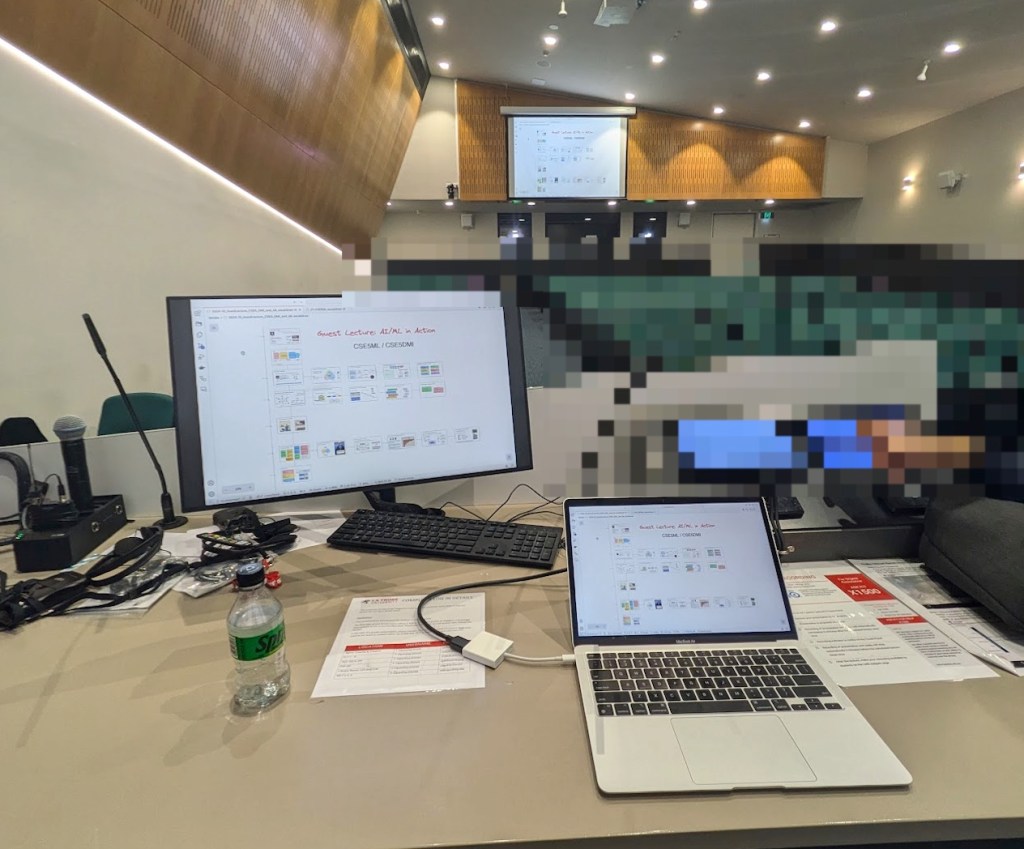
In October of 2024, I was invited by Dr Lydia C. and Dr Peng C to give two presentations as a guest lecturer at La Trobe University (Melbourne) to the students enrolled with CSE5DMI Data Mining and CSE5ML Machine Learning.

The lectures are focused on data mining and machine learning applications and practice in industry and digital retail; and how students should prepare themselves for their future. Attendees are postgraduate students currently enrolled in CSE5ML or CSE5DMI in 2024 Semester 2, approximately 150 students for each subject (CSE5ML or CSE5DMI) who are pursuing one of the following degrees:

  • Master of Information Technology (IT)
  • Master of Artificial Intelligence (AI)
  • Master of Data Science
  • Master of Business Analytics

Lecture Notes Repository on GitHub

Viewer can find the Lecture Notes on my GitHub Repository: https://github.com/cuicaihao/GuestLecturePublic under a Creative Commons Attribution 4.0 International License.

Disclaimer

This repository is intended for educational purposes only. The content, including presentations and case studies, is provided “as is” without any warranties or guarantees of any kind. The authors and contributors are not responsible for any errors or omissions, or for any outcomes related to the use of this material. Use the information at your own risk. All trademarks, service marks, and company names are the property of their respective owners. The inclusion of any company or product names does not imply endorsement by the authors or contributors.

This is public repository aiming to share the lecture for the public. The *.excalidraw files can be download and open on https://excalidraw.com/)

2024-10-14: AI/ML in Action for CSE5ML

  • General Slides CSE5ML
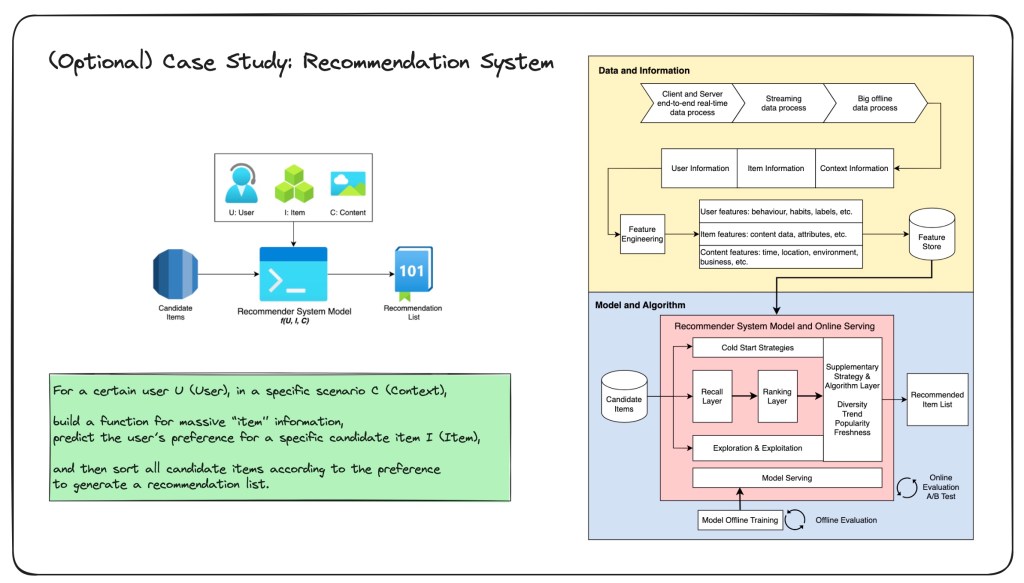
  • Case Study: Recommendation System
  • A recommendation system is an artificial intelligence or AI algorithm, usually associated with machine learning, that uses Big Data to suggest or recommend additional products to consumers. These can be based on various criteria, including past purchases, search history, demographic information, and other factors.
  • This presentation is developed for students of CSE5ML LaTrobe University, Melbourne and used in the guest lecture on 2024 October 14.

2024-10-15: AI/DM in Action for CSE5DMI

  • General Slides CSE5DMI
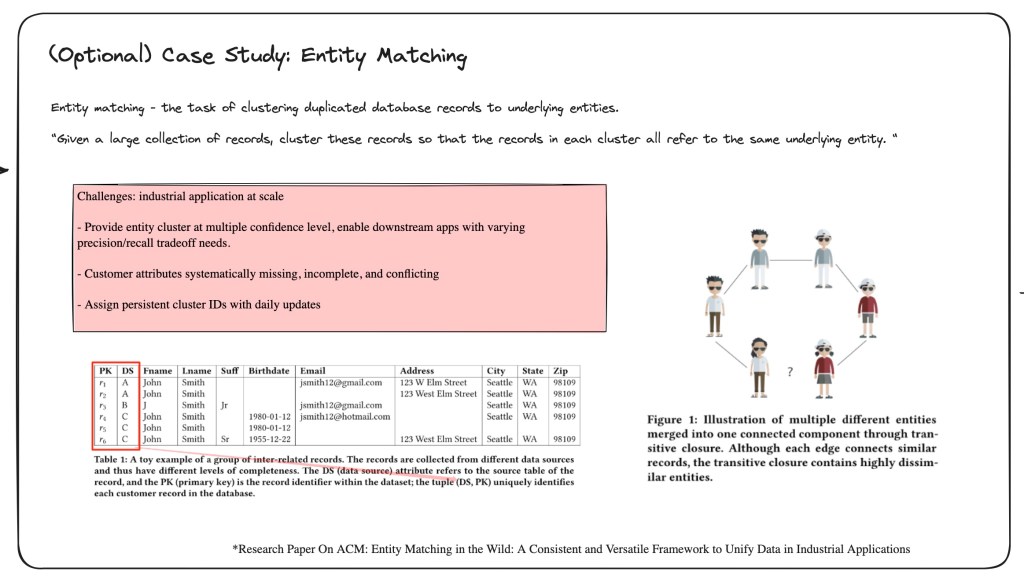
  • Case Study: Entity Matching System
    • Entity matching – the task of clustering duplicated database records to underlying entities.”Given a large collection of records, cluster these records so that the records in each cluster all refer to the same underlying entity.”
  • This presentation is developed for students of CSE5DMI LaTrobe University, Melbourne and used in the guest lecture on 2024 October 15.

Contribution to the Company and Society

This journey is also align to the Company’s strategy.

  • Being invited to be a guest lecturer for students with related knowledge backgrounds in 2024 aligns closely with EDG’s core values of “weʼre real, weʼre inclusive, weʼre responsible”.
  • By participating in a guest lecture and discussion on data analytics and AI/ML practice beyond theories, we demonstrate our commitment to sharing knowledge and expertise, embodying our responsibility to contribute positively to the academic community and bridge the gap between theory builders and problem solvers.
  • This event allows us to inspire and educate students in the same domains at La Trobe University, showcasing our passion and enthusiasm for the business. Through this engagement, we aim to positively impact attendees, providing suggestions for their career paths, and fostering a spirit of collaboration and continuous learning.
  • Showing our purpose, values, and ways of working will impress future graduates who may want to come and work for us, want to stay and thrive with us. It also helps us deliver on our purpose to create a more sociable future, together.

Moreover, I am grateful for all the support and encouragement I have received from my university friends and teammates throughout this journey. Additionally, the teaching resources and environment in the West Lecture Theatres at La Trobe University are outstanding!

Reference

-END-